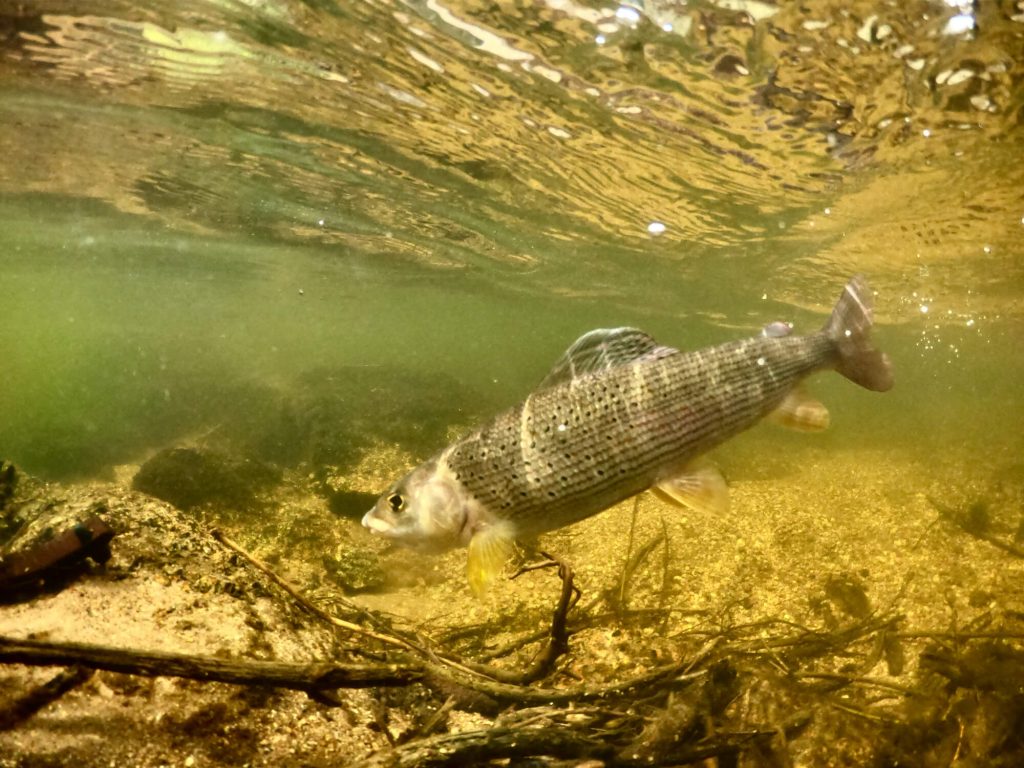
What Decides Whether the Fish Takes the Fly?
Recently, I told you about a stretch of the Lower Sacramento I fish near Redding, CA. Cold, clear water, fish stacked at roughly 3,500 to the mile, and a system for working it that maps almost too perfectly onto thought leadership: the stream is your market, the fly rod and arc are your distribution, the fly is your content.
What I missed showing you, however, is whether a fly’s trust signal leads to a strike, or not. The same applies to thought leadership content. You may have great content, but what signals does it give off in the first few seconds? Covering the water gets a fly in front of a fish; it does not get the fish to take it. In thought leadership, a strike means someone seeing your content is thinking ‘tell me more’, and becomes open to next steps.
I saw this up close with a big rainbow, a real trophy. He was holding in a soft riffle just below a boulder, tipped up, drifting ten feet from the tip of my fly rod. It turned away at the last possible second. Not spooked. Not gone. Just... unconvinced. He’d seen everything I had to offer and decided, in about half a second, that it wasn't quite real enough. Something was off.
The same pattern holds for marketing content, especially thought leadership. If something seems off, your target audience just keeps scrolling.
What a trout, or an audience, actually inspects

A trout that's holding in clear water, looking up at your fly against the sky, is running several checks at once, and it will ignore your presentation on any one of them. It is the same for your audience including decision makers, hidden influencers, procurement folks and buying committees.
The pattern and weight must match what's actually hatching. Not what worked last month, not your tried-and-true content, but the specific fly your prospects are focused on this week. Longstanding content schedules and timelines are getting demolished by hyper-speed news cycles and AI. And pain points have been written about ad nauseam. Yes, the trout’s pain point may be hunger, but that doesn’t mean it will take what you are offering. Your pattern must match what the fish is interested in today, this moment. Also, trout flies and content must be the right weight for a particular stretch of stream and the day’s fishing conditions. If your nymph is too heavy, it sinks past where the fish are looking. Too light and it never gets down to them at all. In thought leadership we must match the depth of the conversation our audience is already having.
And then there's drag
the single biggest reason a good fly gets refused by a fish. And a major reason good content gets refused by your audience. Drag happens when the current grabs your line and leader before it grabs the fly, so the fly moves faster or slower than the real insects drifting around it. In thought leadership, drag happens when the content is out of sync with the stream’s flow.
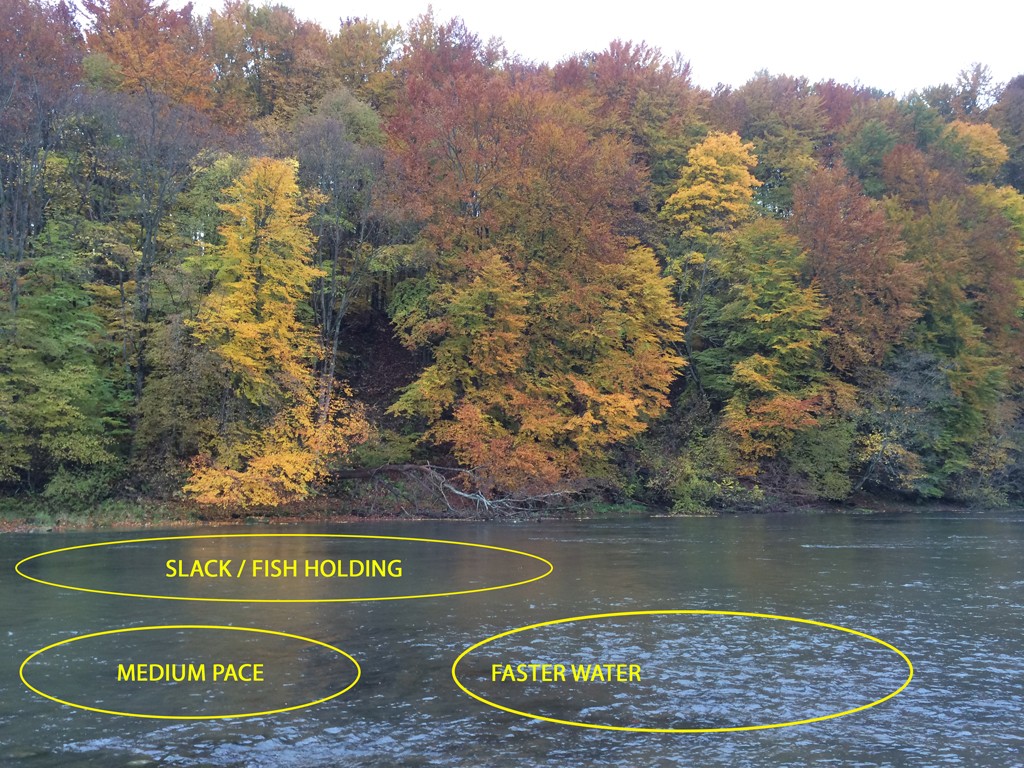
Many content calendars are built like yesterday’s fishing conditions, still deployed on schedule as if the water holds still. It doesn't. It's moving on at least three currents at once, none of which you control:
How hungry is your prospect today for what you are offering?
What dynamics in their jobs are flowing all around them?
What competing options are presenting themselves at the same time?
You can't slow down a river. What you still control is the fly and the presentation: which pattern, size and weight; what depth; whether this is the week for bold streamers or the week for below-the-surface nymphs. A content calendar planned three months out, like a fly box, and cast on autopilot, is fishing with your eyes closed.
In the river, real insects and debris travel at exactly the speed of the current. A trout doesn't need to see your leader to know something's wrong. It just needs to see your fly break rhythm with the water in which it's moving. Even two inches of unnatural movement, invisible to you standing or wading, is unmistakable to a fish that's evolved for exactly one job: discerning real food in the stream.
Both your story and its signal must be real
Here's the reframe I want to leave you with. A fish doesn't decide to trust your fly. It decides your fly isn't broadcasting a reason not to trust it. This is why it is so critical to read the water and do the hard work of audience intel before ever casting your content into the stream.
It’s the same thing with thought leadership. No one ever trusts someone “just because.” They read the content signals before they decide to take what’s offered; they either find a reason to disqualify it in the first two seconds, or they don't. Trust is what's left over when nothing in the presentation triggers a refusal.

There's a framework I lean on for this, out of the classic The Trusted Advisor, written by David H. Maister, Charles H. Green, and Robert M. Galford. (Published by Free Press in 2000 and updated for the digital world.) The authors’ major contribution here is The Trust Equation:
TRUSTWORTHINESS = [CREDIBILITY + RELIABILITY + INTIMACY] ➗ [SELF-ORIENTATION]
Every element of a good drift maps to the numerator, and every element of drag maps to the denominator.
Credibility is your pattern. Is your audience familiar with you and your expertise? Have they seen you somewhere before? Does your thought leadership look like something real, or does it look like debris floating downstream with all the other debris? Did they find you in a place they were looking, or did you just cast in front of their nose because you know where they are? Credibility is your first signal and it comes from genuine introspection of the true value you are offering.
Reliability is your timing and how your content flows in a vast river of content. It's whether your content operates at the depth at which your buyer actually lives. Too light, like surface-level platitudes on a topic everyone else is using, and it never reaches them. Too heavy, such as jargon and abstraction,and it sinks past the conversation entirely. Much of the writing about AI lives here today.
Reliability isn't just showing up consistently. It's showing up at the right depth required for that day, that stream and those fishing conditions.
Intimacy is your drag-free drift. This is the one executives get wrong most often. Intimacy in the Trust Equation is about presenting the real you. Your hard-won expertise, your ups and downs, your tragedies and triumphs revealed in your thought leadership content. These help decide whether an audience feels safe enough to investigate. Content without its own natural rhythm–perhaps to force a CTA or a product mention--is exactly like a fly exhibiting drag. Your target audience will sense something amiss, and they will ignore you. Sometimes you need to just stop selling, and simply show that you are trustable.
What’s one place you suspect your thought leadership content is dragging now?
Self-orientation is how much of your self-agenda is evident in your content. This is where up-to-date audience intel becomes critical. No one cares about our agenda, they only care about theirs. This is the key problem with buyer personas, for example. They are static, which means they are old school and do not resist self-orientation in thought leadership. Set ‘em and forget ‘em was the old B2B formula.
Today’s B2B buyers have fast and fluid work lives. Yesterday’s biases may not be today’s biases, but your content and schedule keep plugging along as if they were. How does someone from procurement see your content today? How does someone from finance or accounting see your content today? In reality, there might be as many changes in content consumption, in a single enterprise account, as there are flies in a fly box. In content production, we address this with repurposing. It’s the exact same reason why a fly pattern comes in many different weights – identical fly but repurposed for different conditions.
Today we can use AI to carve an audience into micro segments with widely varying interests, and then use AI to repurpose a single human-written thought leadership article into dozens of posts and media purpose-built just for them.
A strike isn't earned by the fly alone. It's also earned by the absence of anything that reads as false.
The challenge of trust decay
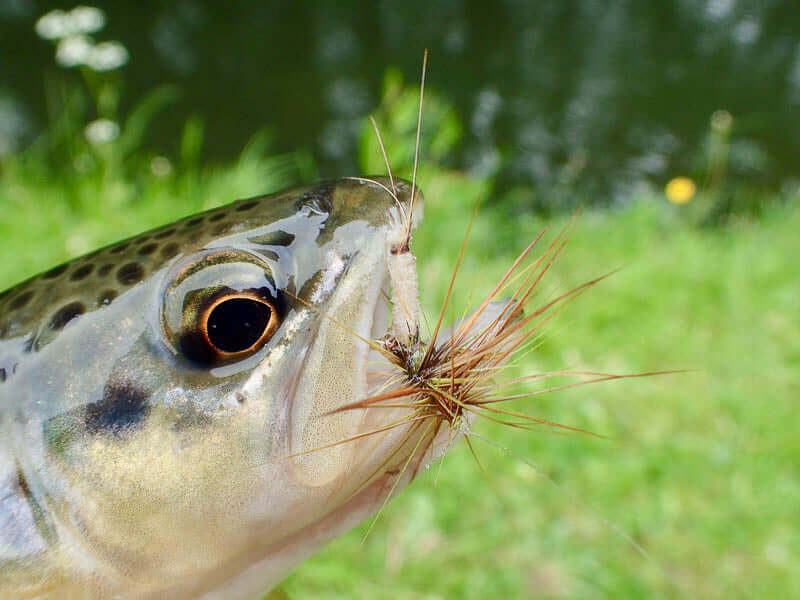
A trout that turns away from a fly presentation, at the last second, seldom forgets. It goes back to holding in that seam, but things are different. Now warier, quicker to refuse, remembering the fly that almost fooled it before. Trust, once broken, doesn't reset to zero. It resets to suspicion, which is worse than zero, because now every subsequent presentation is being graded against the memory of the one that was purposely ignored.
This is trust decay, and it happens to executives and companies constantly — a promise made in a keynote that the product doesn't deliver on, a "thought leader" who turns out to have a ghostwriter and nothing underneath, a vendor whose content said one thing about how they'd treat a customer and whose purchase terms said another. The buyer doesn't announce the refusal. They just stop rising to anything you cast. And the difference between trout and humans is that humans will tell others.
Repair is possible, but it isn't done with a better fly. It's done by fishing differently for a while:
Smaller, truer casts. Rebuilding credibility means smaller claims you can fully back, not bigger ones meant to win trust with one cast.
Longer, quieter approach. Reliability is also rebuilt by an unglamorous stretch of simply doing what you said, repeatedly, and offering credible proof.
No hook on the first several casts. This is the counterintuitive part, and addresses the self-orientation part. We visibly remove the ask for a while. Content, insight, and follow-through with nothing behind it but the next piece of content, insight, and follow-through.
B2C is mostly about flashy, immediate gratification. B2B is mostly about explanation and ROI. B2B buyers want authentic, repeated evidence that your drift is real. In my lifetime, we have moved from a high-trust society to a low-trust society. People are looking diligently for high-trust signals.
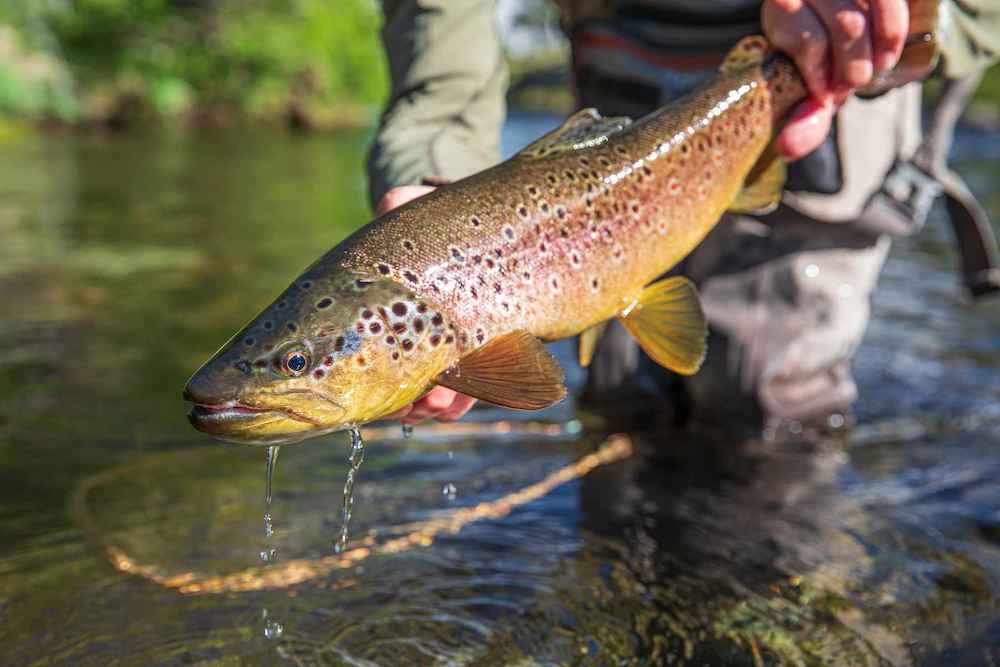
Is your signal trustworthy?
Most executives believe their content is good. Almost none of them have watched it drift the way audiences, with all their filters and biases, actually see it: whether it's dragging under an obvious sales message, whether it's the right weight for the reader's role, or whether the ask, direct or implied, is too heavy for the moment
That's the audit worth doing before you create your next piece of thought leadership content. Not "is our content good," but "is there anything there that would make a selective, well-fished reader turn away at first glance?"
Next time, think about building the right signals into your thought leadership before creating it.
Discover Your Score
I built a two-minute, no-contact-info-required self-assessment to help you see this before you wade back in. It'll tell you which section of the stream you're fishing — and whether your current pattern is likely to draw a refusal.