The Fly Fishing Method for Executive Thought Leadership
By Mike Harris, Founder, Harris CMO Partners
Published Jul 6, 2026
There is a stretch of river in California I love to fish. It runs cold and clear, and it’s where I find and catch trout worthy of the name.
Before I start, I read the water — flow level and clarity, temperature, weather and light, insect activity, structure and depth.
Is there any better metaphor for showing someone how to build a thought leadership system that improves business outcomes, like revenue lift?
Here’s why it maps so precisely
Most tech executives approach thought leadership the way inexperienced fly fishers approach a new stretch of river: they walk to the water’s edge, make one big cast toward the middle, wait thirty seconds, and repeat with the same fly from the same position. Then they relocate to a tastier-looking stretch of river and repeat themselves.
But the river isn’t the problem. On my favorite stretch of the Lower Sacramento River near Redding, CA, the fish density holds around 3,500 fish per mile, with many sources noting strong numbers of 15–20 inch rainbows and larger trophies possible. This means about 200 fish per 100 yards.
That last figure holds well as an analogy for your prospect pool. There’s plenty out there but you need a system, not a sprint, to find them and get some interest. B2B influencers and decision makers, like fish, are wary. They know exactly what they want and how they want it presented to them. Anything less and they’ll ignore you.
An engaging thought leadership program works exactly like a disciplined fly angler systematically working a stream. Every element of the practice maps in succession:
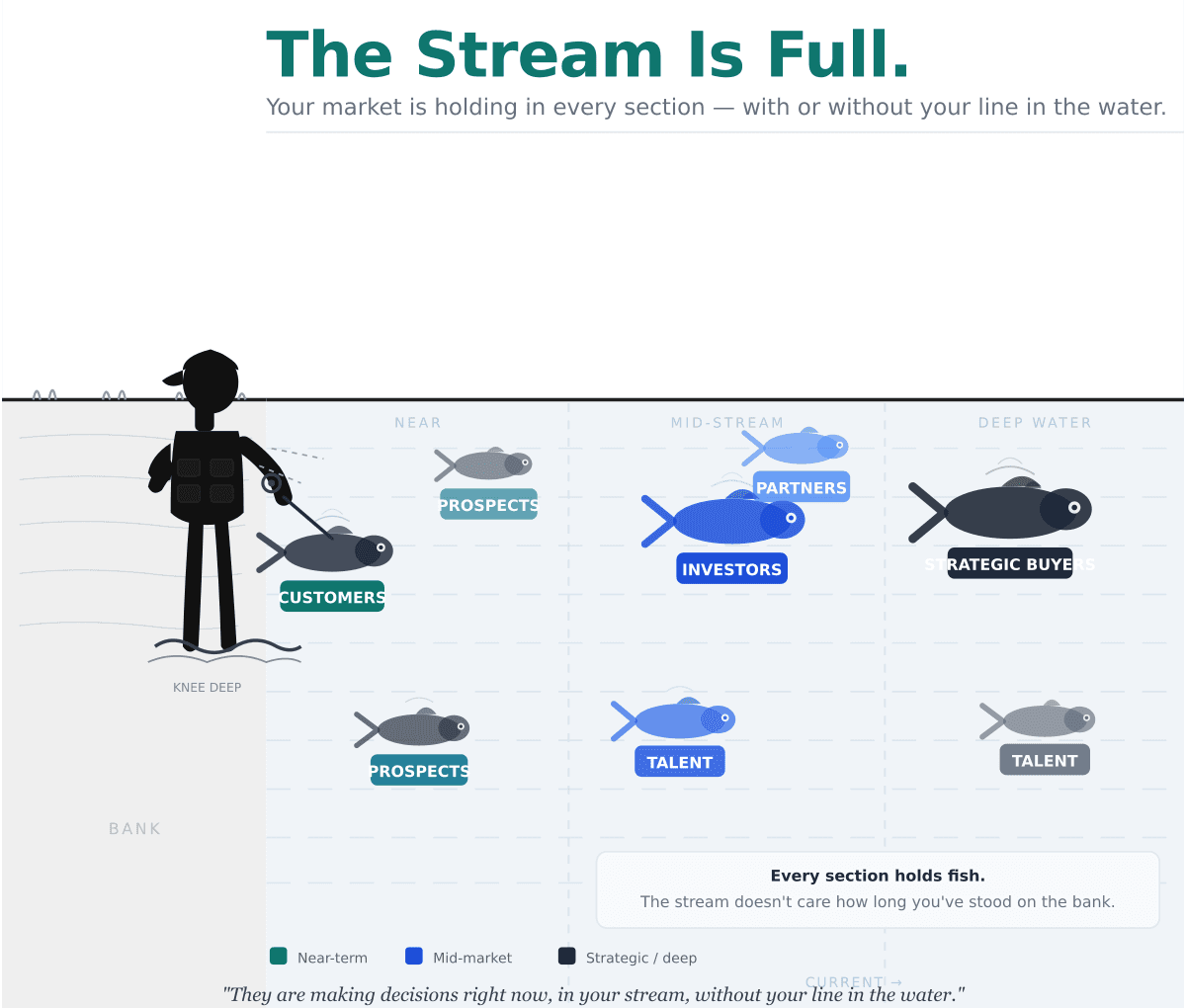
The stream is your market — the full audience of buyers, influencers, and hidden stakeholders you are trying to reach.
Wading in is the commitment to show up consistently, in public, with something worth reading. Too many executives stay on the bank.
Your content pillars are your flies — each one a specific theme or point of view you are testing with the market.
Each casting position in the arc is a distribution channel: LinkedIn, X, email, podcast, white paper, video. You cover them all before declaring a pillar has failed.
Wading deeper is amplification — paid promotion, guest appearances, speaking, partnerships — reaching further into the market once you’ve covered the water in front of you.
And the strike? That’s the inbound inquiry, the booked call, the referral from someone who read your article three months ago and finally reached out. It is not an accident. It is what happens when the system works.
The element most executives overlook is the arc.
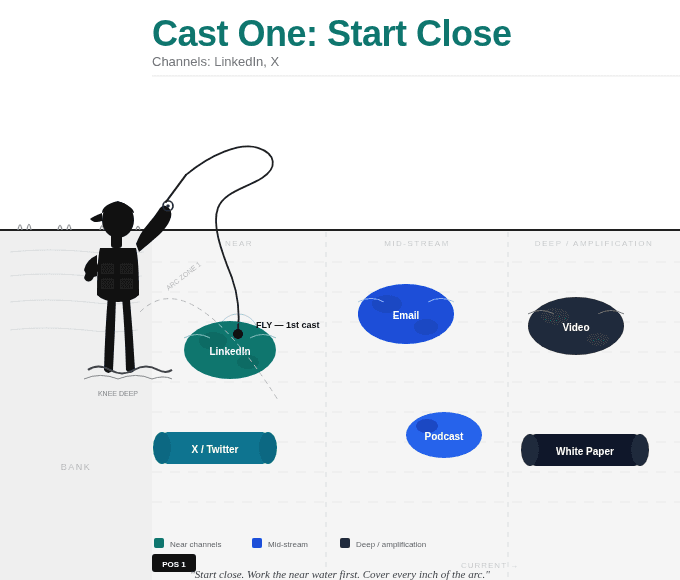
When I say cover the arc, I mean this specifically: for every content pillar you deploy, it must reach every channel in your distribution pattern before you have valid data on whether it’s producing. A LinkedIn article is one cast. The short-form post derived from it is the second. The X thread is the third. The email newsletter version is the fourth. The short video is the fifth. The guest podcast is the sixth.
Many executives publish the article and check the likes after 48 hours. They’ve made one cast and walked away from the water.
A pillar needs six to eight weeks of systematic deployment — all the casts, from every position — before you have genuine evidence of whether it resonates with your market. I have watched executives abandon content strategies that were working because they evaluated them before they were finished. The fly was fine. They just hadn’t covered the water.
On changing flies
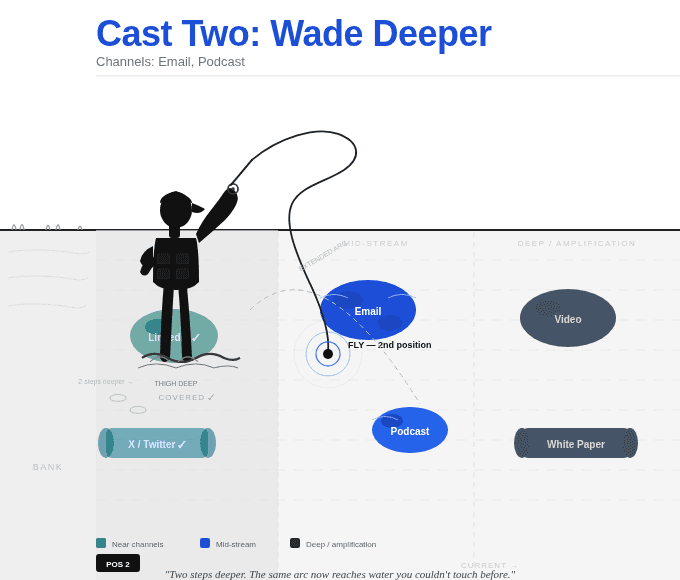
A skilled angler does change flies, but deliberately, based on evidence, not impatience. In thought leadership as in fly fishing, the evidence is all around you. When fly fishing I observe a swarm of insects and/or look underneath rocks in the stream to find nymphs or hatching insects, and I match my fly pattern to those. In thought leadership I observe data that’s easily found:
Which content pillars generate conversations with decision-makers
Which distribution channels deliver the highest-quality engagement
Sentiment analysis in comments and replies
Attribution data showing influence on sales pipe
The best thought leaders treat content like fly fishing: run the full arc, read the evidence, then adjust with intention, not out of frustration.
This means pivoting a content pillar based on metrics, not when you’re bored with the topic. It means looking at your engagement data patterns, your inbound inquiry sources, your measured comment quality, and asking honestly: is this pillar engaging the audience I want? Did this pillar contribute measurable lift to pipeline?
The most important thing I can tell you about the current state of B2B thought leadership
The stream is full. There are buyers holding in every section, people actively looking for your expertise and leadership. They are making purchasing decisions, influencing buying committees, shortlisting vendors, and forming opinions about who is worth talking to. They are doing this right now, in your stream, without your line in the water.
The executives who are finding and engaging their targeted audiences aren’t smarter than you. They aren’t better writers. They didn’t get lucky. They waded in, worked the arc, changed flies when the data told them to, and kept casting.
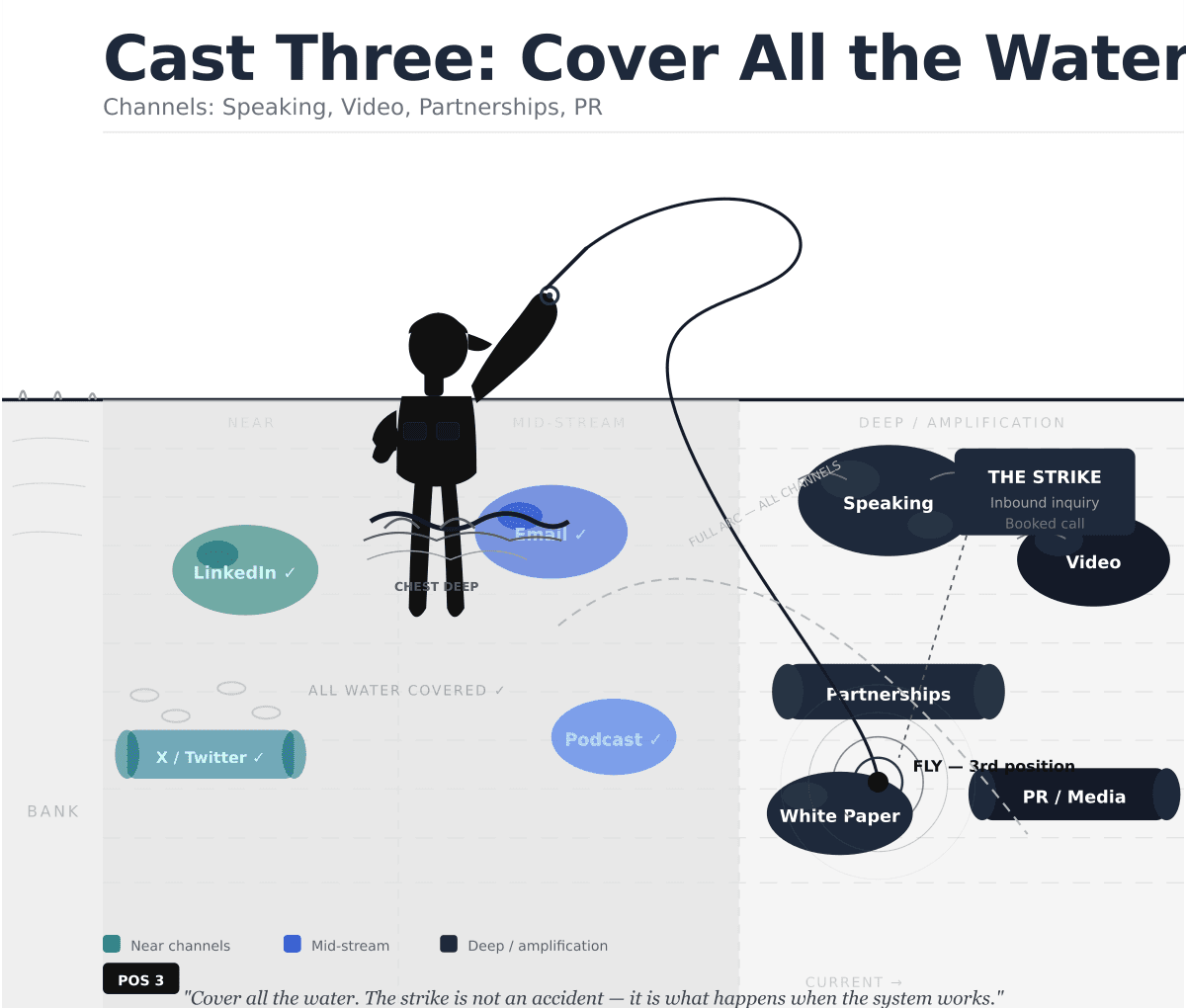
The fish won’t strike until you present the right inducement in a manner they recognize and accept, one that does not spook them. The same goes for prospects, investors and the high quality talent you need to grow.
Where does your organization fall — building a real signal, or still counting on the market to notice? I’d like to hear how other leaders are thinking about this.
Discover Your Score
If you want to know where your signal stands before you wade in, I built an assessment for exactly that. It takes two minutes, it’s free, and no contact information is required. It will tell you which section of the stream you’re in — and which fly to tie on first.
Discover Your Score — https://www.harriscmopartners.com/#discoveryourscore
Mike Harris is a tech CMO with 30+ years leading marketing at technology companies, from Fortune 500s to high-growth turnarounds. He now runs Harris CMO Partners, helping tech executives build the thought leadership systems that get them heard.
Mike Harris, © Harris CMO Partners 2026
Originally published on LinkedIn: https://www.linkedin.com/pulse/fly-fishing-method-executive-thought-leadership-mike-harris-kcxuc/